VW, Audi, Skoda, Seat: 5th-Generation Haldex – Details and Common Faults
System Architecture
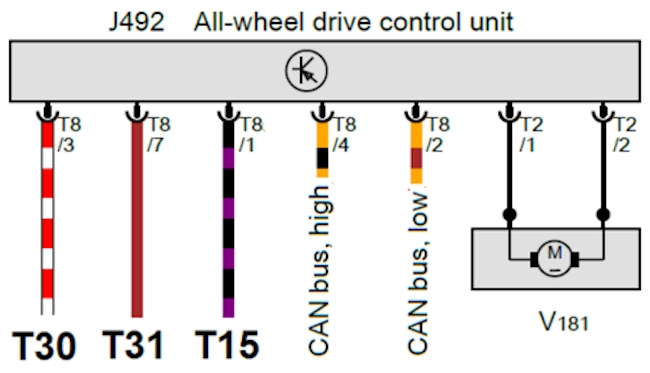
This system is pretty simple, made up of just a few components. It includes a control unit that powers a pump with a filter screen. When pressure builds up, a piston pushes on the clutch pack, which then kicks in the all-wheel drive. Plus, there's a safety valve to release any excess oil pressure.

Unlike earlier generations, you won't find a replaceable filter cartridge here. The system also doesn't have the 'n373' valve for clutch engagement angle control or any pressure sensors. So, any pressure values displayed in your diagnostic tool's measuring blocks are just estimates and should only be used as a guide.
Common error codes
When you're scanning the vehicle for fault codes, it's super important to use a decent diagnostic system. If you don't, you might end up thinking there are no fault codes stored at all!
- 131599 – All-wheel drive clutch – U0114 00 [009] – No communication (usually an ECU module problem)
- 131599 – All-wheel drive clutch control module – C1113 07 – Intermittent fault (usually an ECU module problem)
- 16670 – All-wheel drive – C1113 07 [008] – Mechanical failure (typically a problem with the pump OR/AND transfer case)
- 16671 – Haldex clutch pump – C1112 04 [008] – Internal system fault (damaged pump AND ECU module needs repair)
- 16671 – Haldex clutch pump fault – C1112 04 – Passive/intermittent status (damaged pump AND ECU module needs repair)
- 16668 – Haldex clutch pump – C1112 07 [008] – Intermittent mechanical failure (usually a pump problem)
- 16666 – Haldex clutch pump – C1112 13 [008] – Open circuit (usually a pump problem)
- 16664 – Haldex clutch pump – C1112 11 – Short to ground
- C111307 – Mechanical failure – Passive/intermittent status (usually a seized pump that needs cleaning and re-adaptation, or a transfer case issue).
⚠️ WARNING!
Error 16671 – Haldex clutch pump – C1112 04 [008] Internal system error or “C111204 Haldex clutch pump, faulty”
The ISF (Internal System Fault) error occurs when the pump is faulty. However, even after installing a new pump, code 16671 often reappears after being cleared. This is a known software issue in the fifth-generation Haldex controller. In most cases, performing the “Pump Learn” procedure does not resolve the problem—sometimes the error code disappears, but in many cases it remains. The problem stems from an internal system table used by the controller software to calibrate the current and voltage sensors. If the stored values deviate from the acceptable range, the controller detects an ISF error. The cause is usually a faulty pump.
In that case, please send the controller to us and we will manually make the necessary changes to the software.
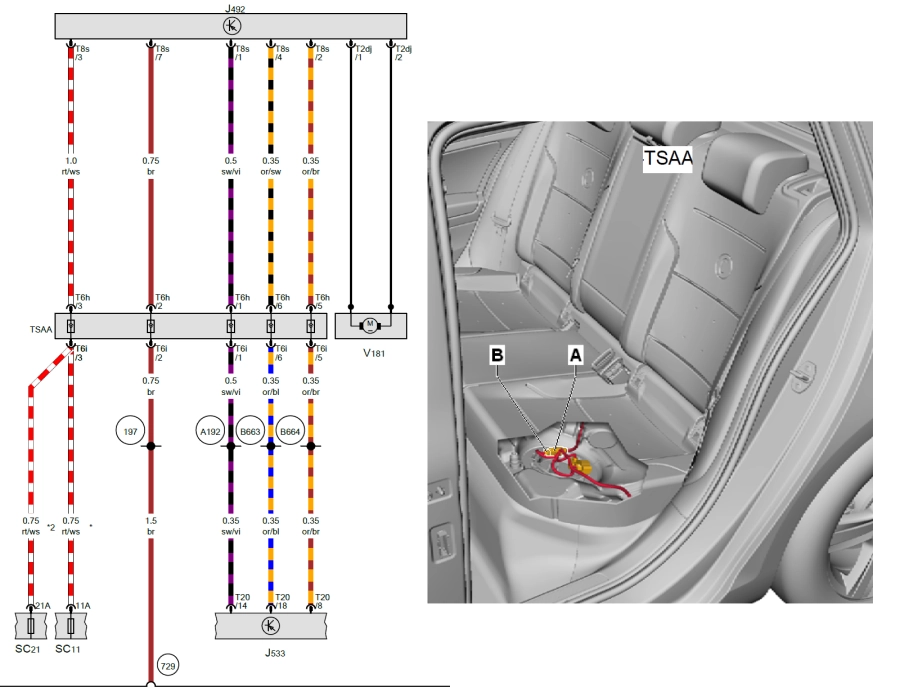
Code 16671 can also pop up due to a weak power supply to the Haldex controller. It actually gets two 12V power feeds.
Make sure to check both power feeds using a 12V bulb – that's your load test. Steer clear of multimeters, because even with dodgy connections or corroded pins, you'll still see a 12V reading.
Checking the power supply
The most common reasons for a lack of power are:
- A blown fuse (for fifth-gen Haldex systems in VAG cars, you'll find two fuses: one under the dash inside the cabin, and another under the hood).
- A damaged connector located under the rear seats, behind the plastic covers for accessing the fuel tank. It is a 6-pin connector, of which only 5 pins are used. Or, in the case of the VW T5, the wiring harness near the left rear wheel.


Haldex pump. Inspection
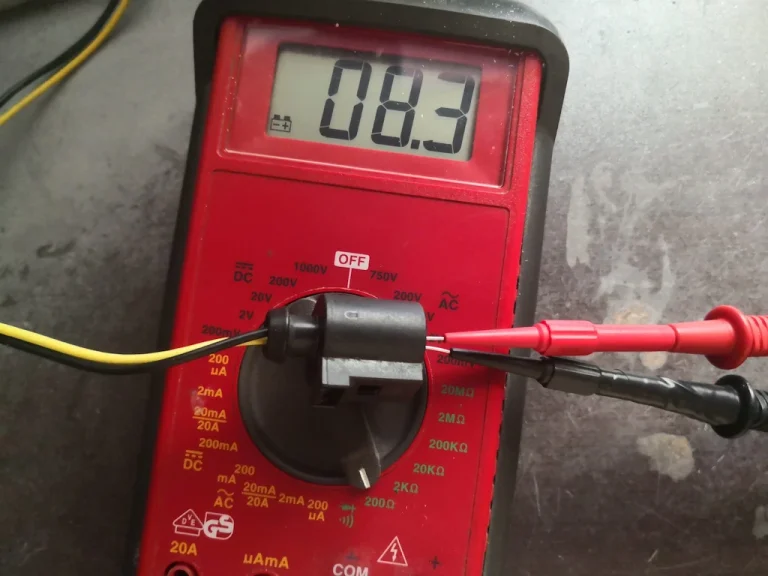
We test the 5th-generation Haldex pump with a multimeter. The resistance of the pump motor windings should be 5 … 8 ohms. In practice, it should not be below 2 ohms. If the pump resistance is below 2 ohms, cleaning the brushes and the pump motor commutator may help in some cases. Damage to the pump (loss of performance) is often caused by a failure to change the oil in the Haldex system.
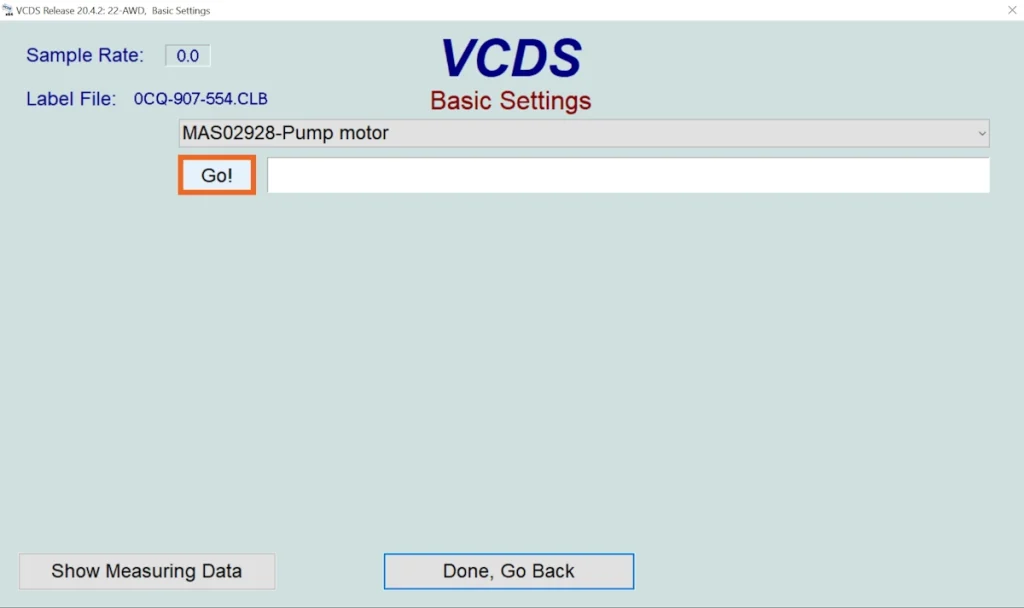
⚠️ WARNING! After installing the new pump, you must perform the adaptation procedure. This will allow the controller to save the correct supply values and ensure that the drive operates properly.
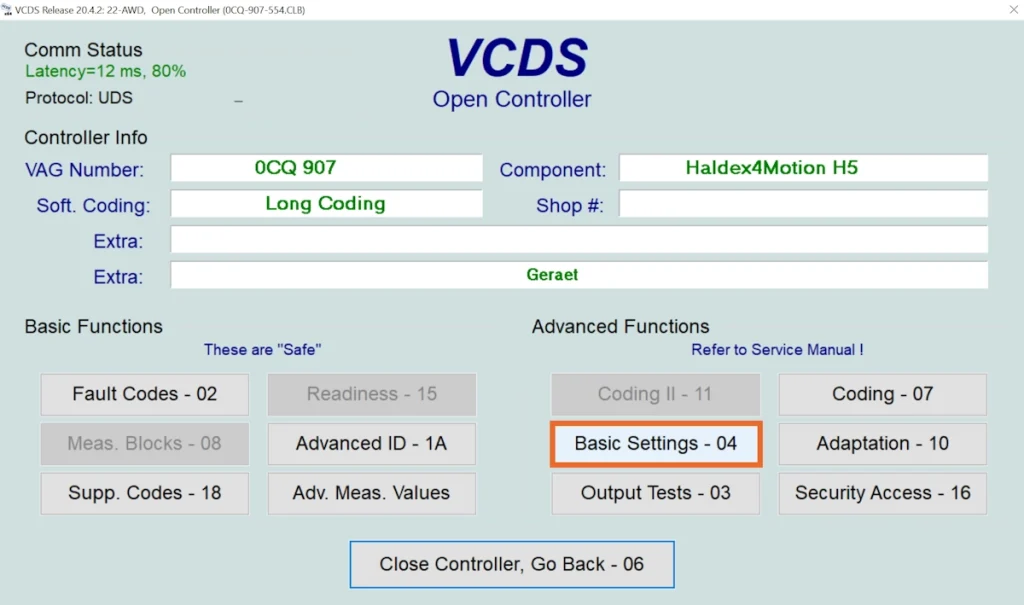
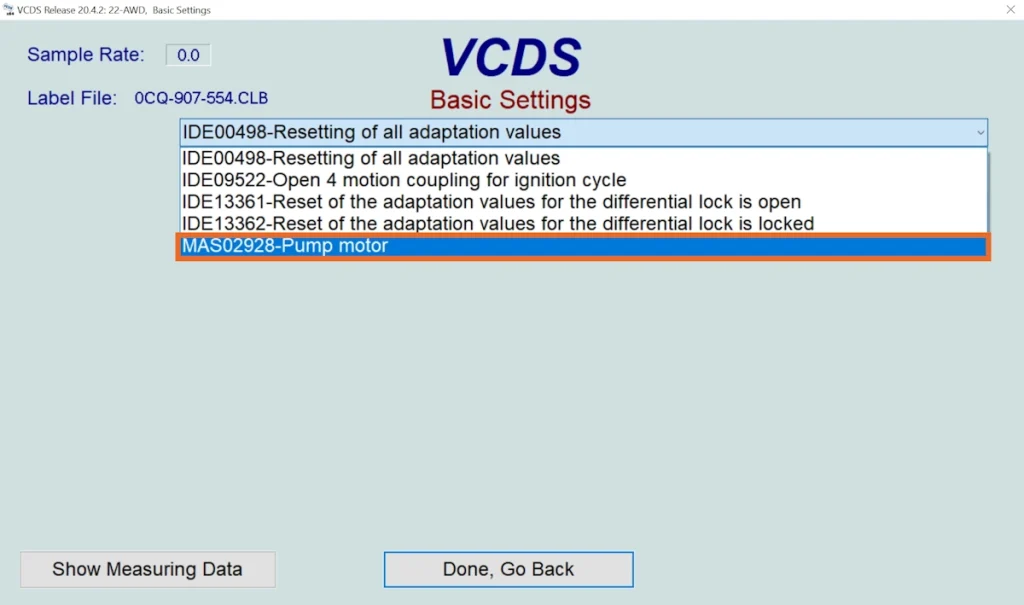
The Haldex controller learns how much power the pump needs to operate until it hits a specific pressure threshold. This process happens by monitoring the pump's current draw. If the pump is blocked or damaged, the controller records really low adaptation values. As a result, when the system tries to engage the pump, it doesn't supply enough power for it to work correctly.
It's also super important to do regular and proper oil changes, which includes disassembling and cleaning the pump strainer (just a heads-up, 5th gen units don't have a separate filter).
Heads up! Change your oil every 30,000 km.